What Makes a Great Surf Photo? A Surfer's Guide to Recognising Quality
Published 9 May 2026
You're scrolling through a gallery of photos from your session. Some jump out immediately. Others feel flat or uninspiring even though you know you were surfing well. What's the difference?
Understanding what separates a great surf photo from a mediocre one helps you know what to look for when buying, and gives context for why some photographers charge more than others.
The technical foundation: sharpness
The most basic quality check: is the subject in sharp focus?
Specifically, look at the leading edge of the surfing — the front foot, the front hand, the rail of the board entering the water. This should be sharp. Look at the face — if visible, the eyes or the chin should be in focus.
Sharp water spray is a bonus and indicates a very fast shutter speed (1/3000s+). But blurry spray around a sharp surfer is fine and often looks natural.
What's not acceptable: a blurry surfer. Motion blur in the subject almost always means a shutter speed that was too slow. This isn't salvageable in editing.
The decisive moment
Photography has a concept — borrowed from Henri Cartier-Bresson — called the "decisive moment": the precise instant when all elements align to create maximum visual impact.
In surf photography, this is usually:
- The top turn or snap: At the peak of the turn, when the board is maximally redirected, spray is at its height, and the surfer's body is fully committed
- The bottom turn: At maximum compression before the drive up the face
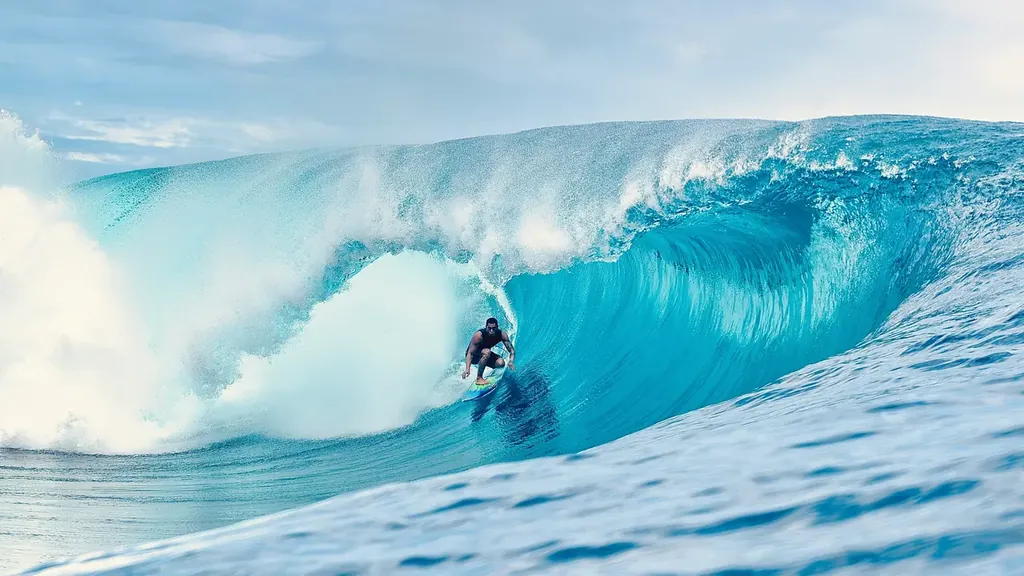
- Exiting the barrel: The millisecond the surfer clears the tube
- The peak of an aerial: Maximum height, board fully released from the water
A photo shot 0.3 seconds before or after this moment looks different. The board is in the wrong position, the spray isn't there yet, the body isn't fully extended.
Look for photos where everything is at the moment — not approaching it or just past it.
Light direction and quality
Light quality separates technically correct photos from beautiful ones.
Front-lit: The sun is behind the photographer, hitting the front of the wave and the surfer's face. Clean, clear, commercial-looking. What most surf photography aims for.
Side-lit: The sun is to one side, creating shadows that define the wave's texture and the surfer's form. Can be more dramatic than front lighting.
Backlit: The sun is behind the subject, creating silhouettes or a halo effect. Can be beautiful deliberately — but if the intention was a front-lit portrait-style shot and the face is in shadow, it's a failed photo.
Golden hour light: The warm orange-gold light of the first or last hour of sunlight creates photographs that look different from any other time of day. The shadows are long, the colours are rich, and even ordinary waves look beautiful.
When you're browsing your photos, notice the ones where the light is hitting your face and the wave face simultaneously. Those are the hero shots.
Framing and composition
A technically perfect photo in the wrong composition still doesn't work.
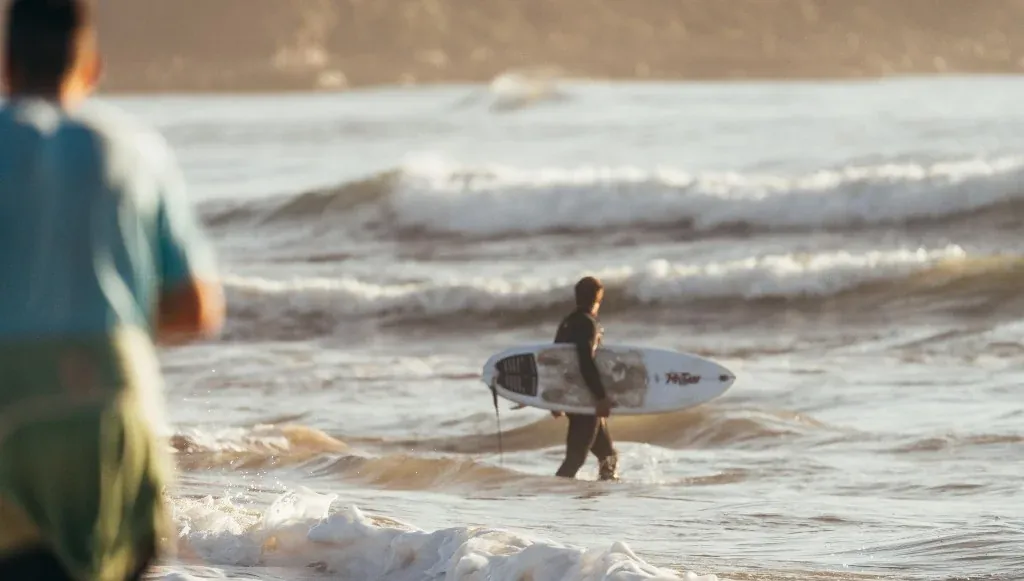
You should be prominent in the frame. A tiny figure in a vast seascape is a landscape photo, not a surf photo. Your body — particularly your torso and up — should fill a meaningful portion of the frame. A common guideline: your full body height should occupy at least 25% of the image height.
Leading space: There should be empty space in the direction you're moving. A photo where you're riding right with the frame edge immediately in front of you feels cramped. Space in front of you implies motion and freedom.
The horizon: In most surf photos, a tilted horizon (the waterline running diagonally across the frame) is a mistake. Some photographers tilt intentionally for energy — but unintentional tilt just looks sloppy.
Distracting backgrounds: Other surfers, photographers, cars, buildings — these elements can pull attention from the main subject. Not always avoidable, but worth noting.
The wave as context
The wave isn't just a backdrop — it tells the story of what's happening.
A photo of you on the face of a clean 4-foot wave with a lip about to throw communicates something completely different from a photo of you on a crumbling 2-foot wave. Both might show identical surfing technique, but the former tells a better story.
Look for photos where:
- The wave is in a photogenic phase (not already broken, not boring)
- The relationship between you and the wave is clear
- The scale of the wave is evident
Expression and body language
This is often overlooked, but it's what makes surf photos feel alive.
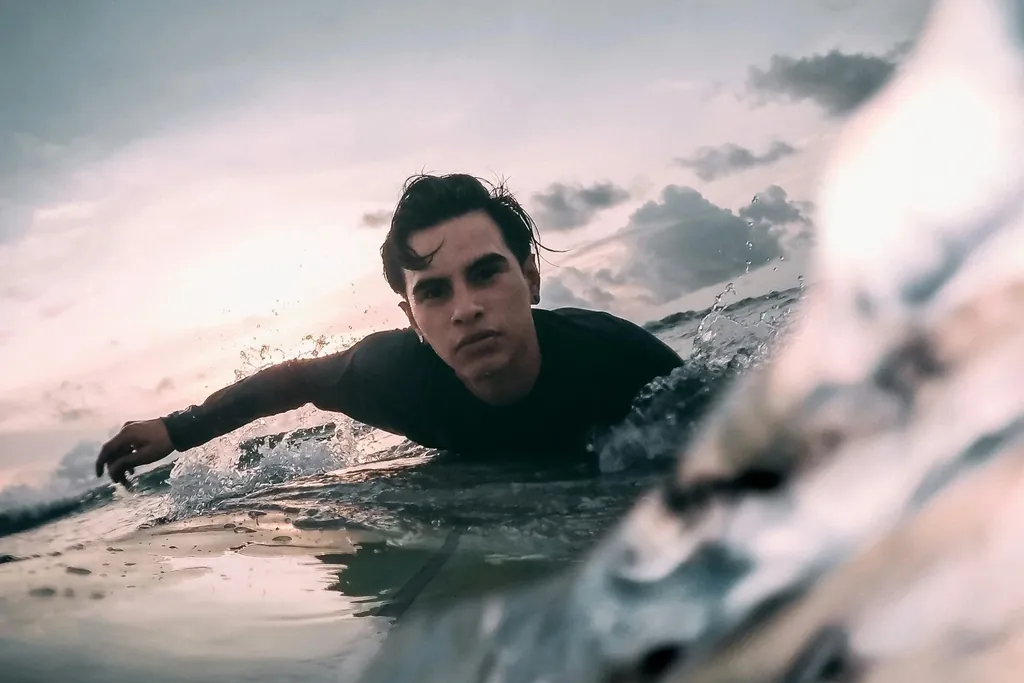
The best surf photos capture something honest about the experience. The focus and intensity of setting up a turn. The pure joy of a clean barrel exit. The concentration of setting up an aerial. The slightly surprised expression of a surfer who stomped a trick they weren't sure about.
When you're browsing your photos, look past the wave and the spray at your own face and body. The photos where your expression and posture tell a story are the ones worth buying.
A simple checklist for browsing your gallery
When you're looking through a session album:
- Is it sharp? (Reject blurry ones immediately)
- Is it the right moment? (Board position, spray, body posture at their peak)
- Is the light good? (Front-lit face, warm colour if in golden hour)
- Am I prominent enough in the frame?
- Does my expression/body language tell a story?
The photos that pass all five criteria are your buys. The rest, no matter how much you remember about how good that wave felt, probably aren't worth purchasing.

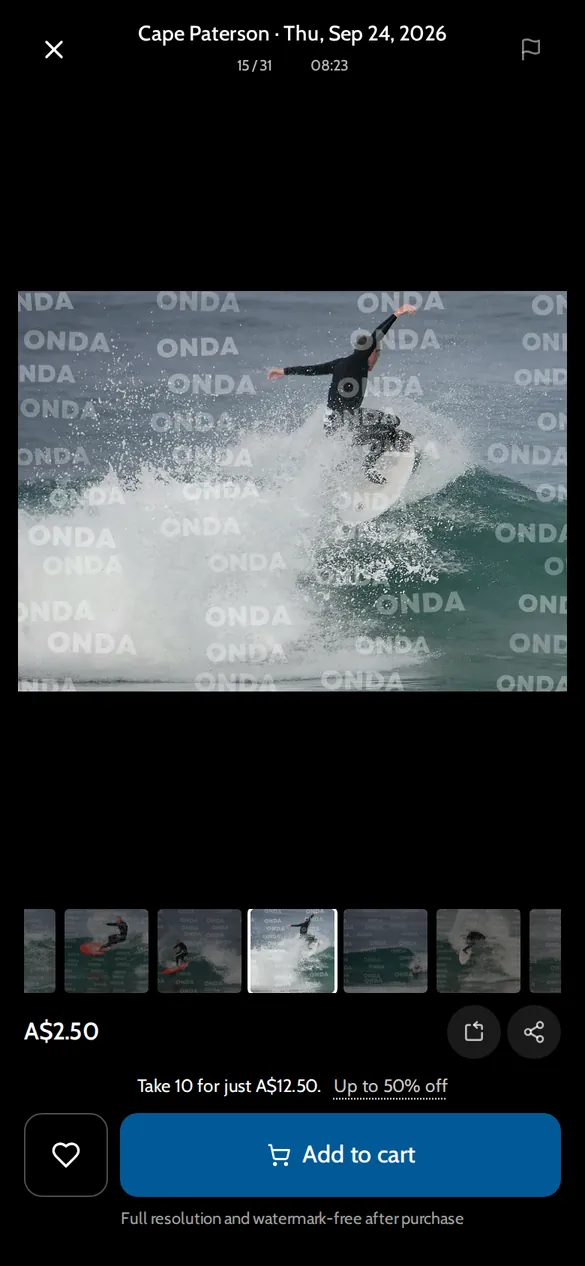
For help finding your session, see how to find photos of yourself surfing. And for why it is worth buying your best shots, read why every surfer needs a professional photo.