The Most Iconic Surf Photos Ever Taken (And What Makes Them Great)
Published 11 June 2026
Every sport has its definitive images. In surfing, a handful of photographs have done more to communicate what the sport is — the freedom, the danger, the beauty — than any text ever could. Understanding what makes these images work is a masterclass in what surf photography can aspire to.
What makes a surf photo iconic
Before looking at specific images, it's worth establishing what elevates a surf photo from excellent to iconic:
- It captures something that hadn't been captured before — a new wave, a new level of performance, a new visual approach
- It tells a complete story in a single frame — you understand the risk, the skill, the environment without needing context
- It transcends the sport — people who don't surf find it compelling
- It defines its era — looking at the image tells you something about when it was shot
Most great surf photos have some of these qualities. The truly iconic ones have all of them.
The barrel shot as icon
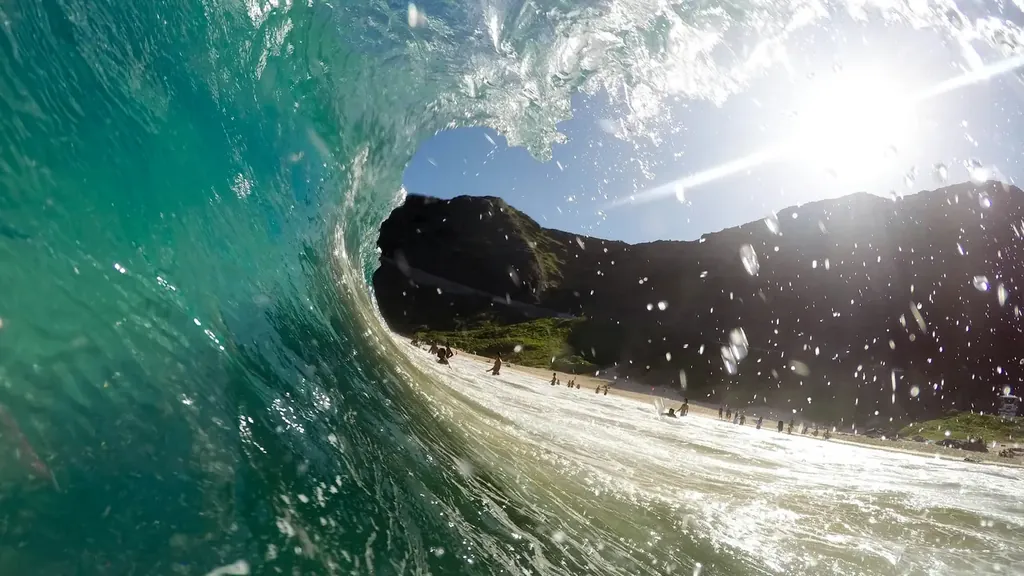
The image of a surfer inside a breaking tube — lit from within, the circular wave face framing them — is probably the most enduring composition in surf photography. It appears again and again because it does something that language struggles to: it shows the inside of an experience that very few people will ever have.
The earliest technically successful barrel shots required photographers to be in positions that were genuinely dangerous — inside or very close to the breaking wave with no reliable waterproof housing. The images from the 1970s and early 1980s that pioneered this approach shaped how an entire generation understood what surfing could look like.
What these photos communicate that can't be staged: the scale of the wave overhead, the compressed light filtering through the water, the surfer's position on the edge of control. Every element is real and unrepeatable.
Pipeline: the defining wave
The Banzai Pipeline on Oahu's North Shore has probably generated more iconic surf photographs than any other break in the world. The combination of factors — the wave's extraordinarily hollow shape, the clear Hawaiian water, the consistent winter light, and the density of elite surfing talent — creates near-ideal photographic conditions.
Pipeline photography established many of the conventions of surf photography that persist today: the waterline position, the rock platform shooting spot at Backdoor, the angle that puts the photographer looking directly into the barrel. Generations of photographers have used these positions because they work — the geometry of the wave and the available shooting spots align almost perfectly.
The in-water revolution
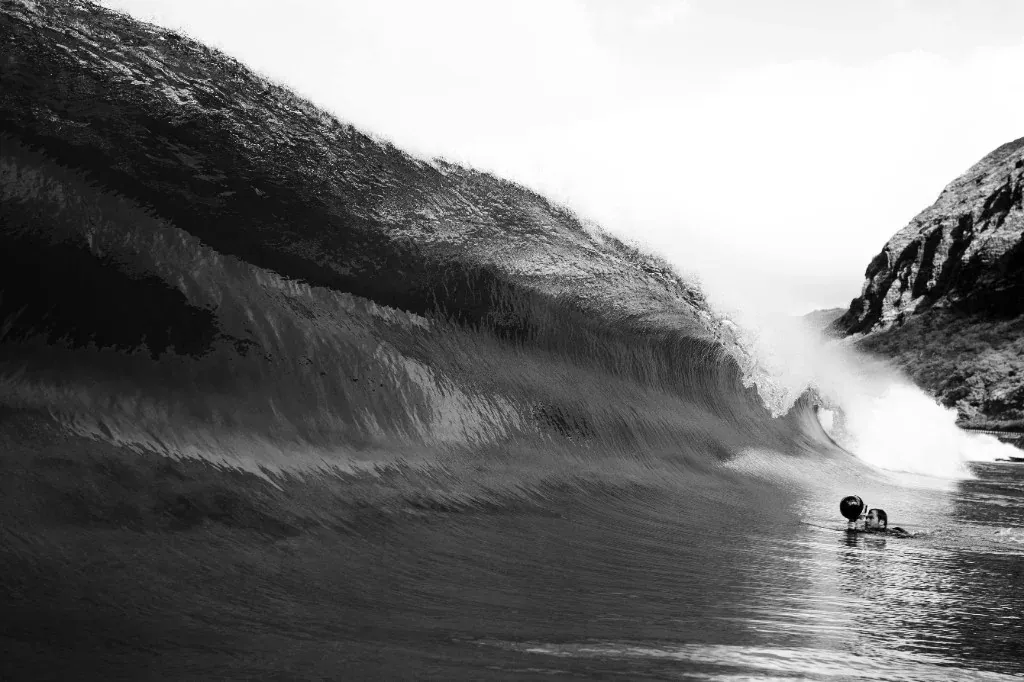
A significant shift in surf photography came when photographers began getting into the water at ocean-level rather than shooting from rocks or the shore. The perspective changed entirely — instead of observing the wave from outside, the viewer was placed inside the surf zone.
This democratised in some ways (you could get closer to the action at breaks without good rock positions) but added enormous physical risk. The images that came from this approach — looking up at a wave face from water level, the lip throwing overhead — communicated a scale and immediacy that telephoto shore photography couldn't match.
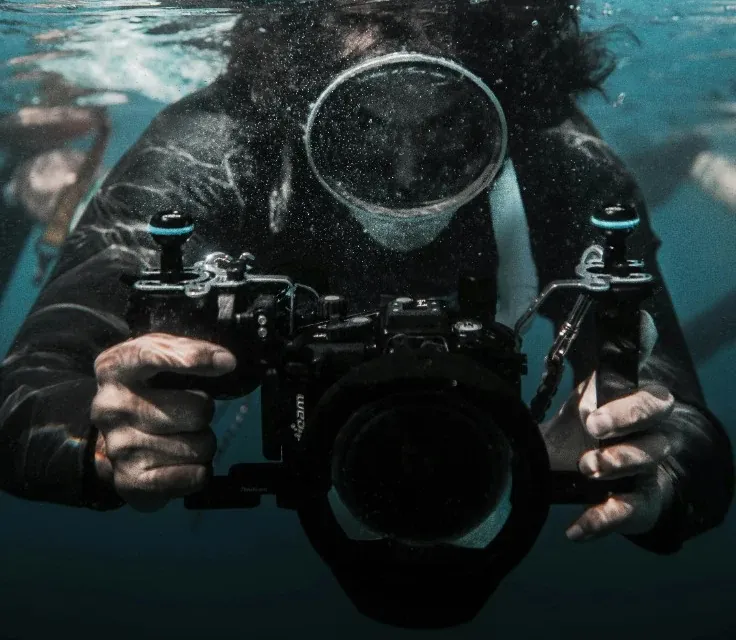
The photographers who pioneered this approach did so without the modern waterproof housings and equipment that exist today. Some of the most dramatic early in-water images were shot with makeshift setups — cameras in modified diving equipment, held by photographers who were professional-level swimmers as much as professional-level photographers.
The aerial era
As surfing's aerial game evolved — particularly from the 1990s onwards — surf photography had to evolve with it. Capturing a clean aerial requires different positioning, different timing, and a different relationship with the surfer than traditional wave photography.
The photographers who adapted quickly to shooting aerials helped define how progressive surfing looked to the world. A well-shot aerial — board fully released from the water, body position clear, spray from the tail apparent — communicates athletic achievement in a way that pure wave riding doesn't always.
The challenge with aerials from a photographic standpoint: the decisive moment is even more specific than in standard surfing. A front loop or a rodeo flip is complete in under a second, and the peak of the rotation is a precise frame that exists for perhaps 1/30th of a second. Missing it by a beat in either direction produces a photo that looks like a confused moment rather than an athletic achievement.
Big wave photography and the scale problem
Photographs of truly enormous waves — 50, 60, 80 feet — face a fundamental challenge: scale is almost impossible to communicate through a two-dimensional image.
The most successful big wave photography solves this by including a reference point. A tow-in jet ski in the face of a Nazaré or Jaws wave communicates scale through contrast — the vehicle we know the size of suddenly looks tiny next to the water. A surfer in a specific body position — a tuck at the bottom, fully committed — gives human scale to an inhuman wall of water.
The photographers who crack big wave photography do so not just technically (shooting in conditions that are by definition extremely dangerous) but compositionally — finding the angles and framings that actually communicate the scale of what they're looking at.
What these photographs have in common
Looking across the most iconic surf images, several patterns emerge:
They were difficult to take. The best surf photographs almost always required the photographer to be in a difficult position — physically, logistically, or technically. The effort is visible in the result.
They show something real. Surfing's visual power comes from the fact that what you're seeing actually happened. The wave, the position, the expression — none of it is staged. The best photographs make the realness palpable.
They have a specific point of view. The truly iconic images aren't just documentation — they reflect a photographer who made deliberate choices about where to stand, when to shoot, and what to frame. You can feel the decision-making behind them.
They leave something to the imagination. The barrel shot works partly because you can't see what happens next. The aerial works because you don't know if the landing will be clean. The best surf photos hold tension.
For working surf photographers
Understanding the history of surf photography isn't just academic. The decisions that made these images great — where to position, what moment to wait for, how to use light — are the same decisions you make every session.
The gap between a photograph that documents a moment and one that defines it is usually not about equipment. It's about understanding what you're trying to show and making deliberate choices to show it clearly.
For profiles of the photographers pushing the craft forward today, see our top surf photographers list and what to learn from the legends.