Surf Photography in Morocco: Taghazout, Anchor Point, and Beyond
Published 1 June 2026
Morocco sits 14 kilometres across the Strait of Gibraltar from Europe, but it feels like a different world. The combination of consistent Atlantic swell, dry desert light, terracotta architecture, and a distinctive local surf culture makes Morocco one of the most photographically compelling surf destinations accessible from Europe.
Taghazout, the small fishing village-turned-surf-resort on the Souss coast, is the centre of gravity — but the surrounding area has enough breaks to fill a two-week trip and more.
Why Morocco for surf photography
The light. The Souss valley region sits at 30°N latitude, with a semi-arid climate that produces consistent sunshine and very clear air. The light quality here — particularly in autumn and winter — is closer to tropical in clarity than to Atlantic Europe. The golden hour is long and the shadows are warm.
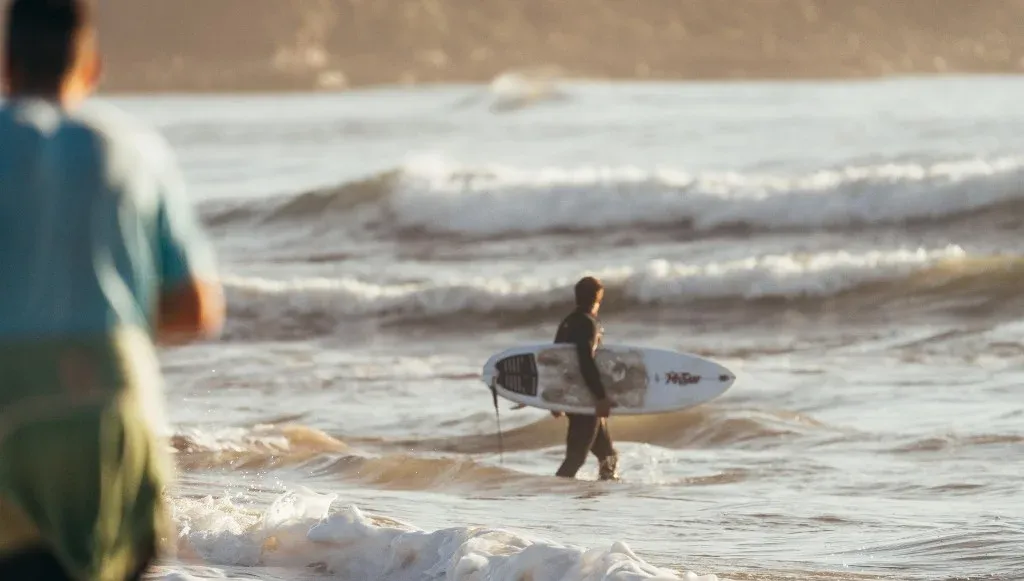
The colour palette. The ochre and terracotta of the medina, the blue of fishing boats, the silver argan trees on the hillsides above the breaks — the visual environment around the waves is rich in a way that European surf destinations aren't.
Accessibility from Europe. 3-hour flights from London, Paris, and Madrid, plus short flights from Spain and Portugal. Lower cost of living than Western Europe. Easy to spend 1–2 weeks shooting without significant financial commitment.
The waves. Consistent north and northwest Atlantic swells hit the coast from October through April. The local reef breaks — particularly Anchor Point — produce some of the longest right-hand waves accessible from Europe.
The key breaks around Taghazout
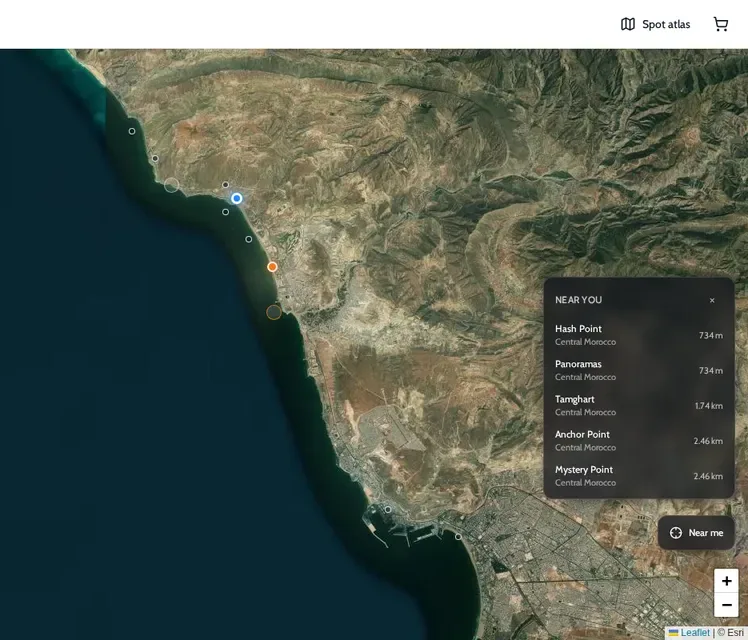
Anchor Point
The headline act. A long, powerful right-hand point break that on good swells produces rides of 300+ metres — among the longest in the world. The wave winds around a headland, creating a complex, multi-section ride.
- Photography position: The cliff path above the break gives a top-down view of the wave's full length — an unusual and striking angle for a point break. Lower positions near the rocks give more standard wave-face shots.
- Best conditions: NW swell, 4–10ft, NE offshore wind
- Best light: Morning — the break faces roughly west, morning light from the east illuminates the wave face
- The cultural context: The argan-studded hillside behind the break, the fishing boats in the bay, the blue-painted village of Taghazout in the background — including these contextual elements creates distinctively Moroccan surf images
Killers
A more powerful, shorter right-hand reef break immediately next to Taghazout. Works on bigger swells and in heavier conditions than Anchor Point.
- Photography: The cliff above the break gives elevated shooting positions. More dramatic single wave shots than Anchor Point's long walls.
Hash Point / La Source
South of Taghazout, accessible beach and reef options. Good for photographing intermediate surfers and when the main points are too big.
Panoramas
A right-hand point break 8km north of Taghazout, less crowded and with a dramatic backdrop of the headland and ocean beyond.
The cultural dimension
Morocco's surf photography has a dimension that pure-action European work lacks — the cultural context is extraordinary material.
The village: Taghazout itself, with its painted houses cascading down the hillside to the water, is beautiful. Surfers walking through the village with boards, the fish market in the morning, the call to prayer over the sound of waves — these create a sense of place that makes images feel like journalism as much as sports photography.
Local surfers: Morocco has a growing local surf scene — young surfers from Taghazout and Agadir who grew up watching the swell and learning to surf in the lineups. These are interesting subjects photographically and culturally.
Non-surf elements: Goats on argan trees (genuinely iconic). Camel rides on the beach south of Agadir (touristy, but visually effective). Donkeys carrying goods through the medina streets. Including these creates context that pure wave photography doesn't.
Practical notes for Morocco
The season: October through March. Best swell consistency and best light. Summer is flat and very hot.
Travel: Fly into Agadir (direct flights from many European cities). Taghazout is 20 minutes north by road. Rent a scooter or hire a local driver for flexibility between breaks.
Accommodation: Taghazout has surf camps and riads at various price points. Booking in advance for October–December (peak surf season) is strongly recommended.
Language: Moroccan Arabic (Darija) and Amazigh (Berber) are local languages; French is widely spoken. English is common in the surf tourism sector.
Camera security: Keep equipment in a secure bag when walking through town. Standard travel security applies.
For nearby European surf destinations, see the Canary Islands and Sagres and the Alentejo coast. For help finding your session, see how to find your surf photos.