Surf Photography at Hossegor: The Complete Guide
Published 12 May 2026
Hossegor is one of Europe's top surf photography destinations. The sandbar breaks produce some of the heaviest beach break barrels on the continent, clean Atlantic swells arrive like clockwork through autumn and winter, and the annual Quiksilver Pro draws the world's best surfers and photographers every October.
Whether you're a surf photographer planning a trip or a surfer who wants to track down photos from a recent session, this guide covers the key spots, timing, and practical details.
Why Hossegor is special for surf photography
The sandbar breaks at Hossegor produce steep, powerful waves that launch surfers into dramatic aerial manoeuvres and create deep tubes on bigger swells. From a photographic standpoint, this means:
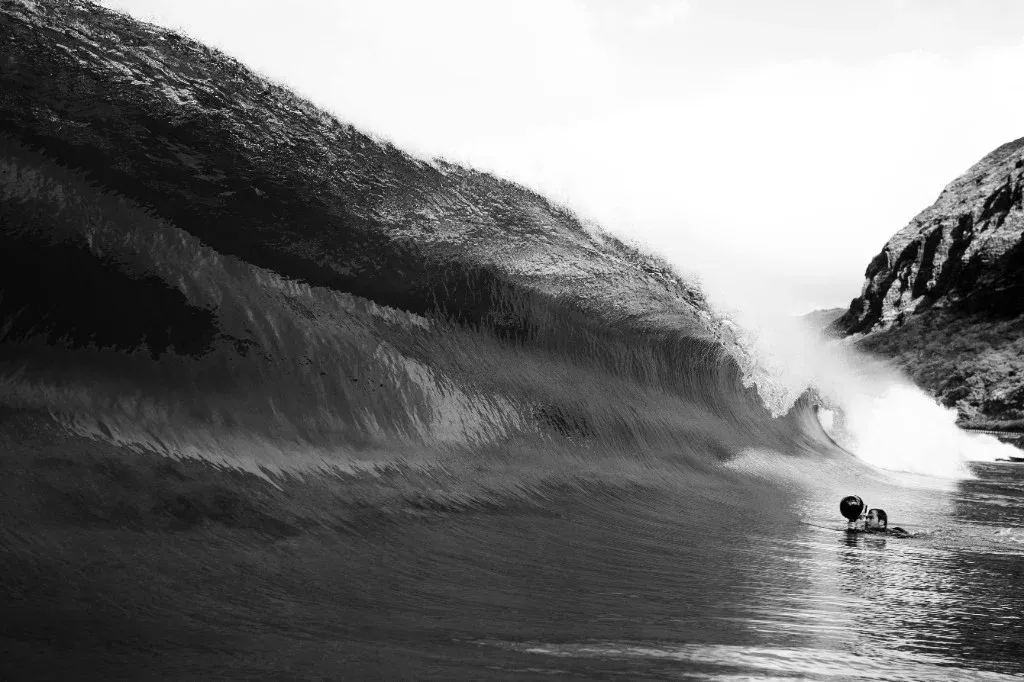
- Vertical wave faces that fill the frame dramatically
- Hollow sections where barrelling shots are possible from shore
- Consistent surfer positioning — breaks that work on sandbars give you more predictable peak locations than reef breaks
The flat, low coastline also means clean backgrounds — mostly sky and water, without cluttered headlands or buildings. If you're new to surf photography, our beginner's guide to photographing surfing covers the fundamentals before you head out.
Best spots for photography
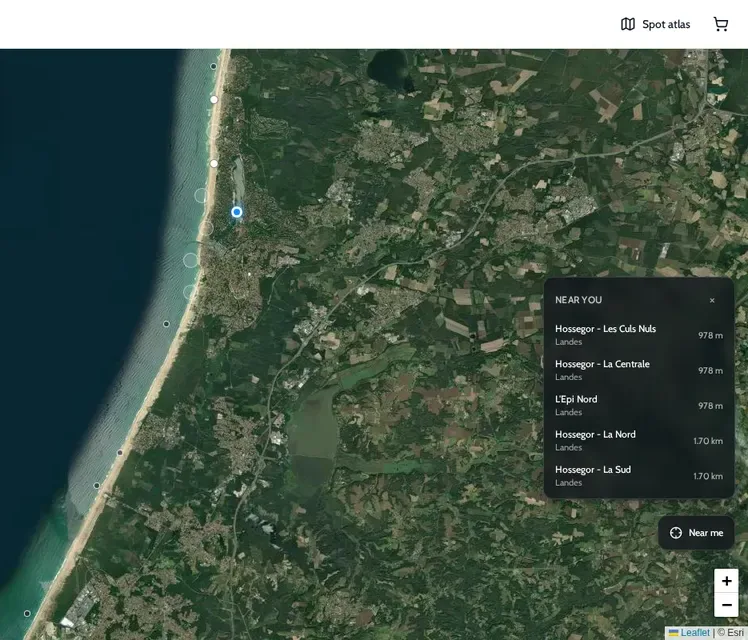
La Gravière
The most famous wave in Hossegor. When it's working, La Gravière produces some of the most powerful beach break barrels in the world.
- Best position for photography: The main beach access point, shooting south. In good swell the peak is relatively consistent.
- Best light: Morning — the sun rises behind the beach, giving you front-lit waves from a southern shooting position
- Best conditions: NW swell, light offshore wind (NE/ENE), 4–8ft
La Nord
North of La Gravière, generally less crowded and more accessible for photographers. Multiple peaks spread across the beach.
- Best for: Wider shots of multiple surfers, or finding a less competitive angle than the main peak
- Access: Easy beach access, flat ground for positioning
Les Culs Nuls (Naturist beach)
Less visited, longer walk, often excellent waves. The isolation means less crowd pressure for photographers and surfers alike.
Timing your visit
Swell season: September–March for the best swells. The Quiksilver/Roxy Pro (part of the WSL Championship Tour) typically runs in late September/October — this is the easiest time to find professional-grade action with elite surfers.
Daily timing for photography: First light to 10am is golden. The offshore winds (typically morning) hold up wave faces for longer, and the light is warm and directional. Midday sun is flat and harsh.
Tide: Check the tide chart for La Gravière specifically — the wave changes significantly across the tide. Local knowledge (any surf shop in town will know) will tell you whether the morning high or the afternoon low is working better on a given swell.
Where to stand
For shore photography at La Gravière:
- Main beach access ramp: Good central position, slightly elevated
- Towards the Jetée Nord (North Jetty): The jetty gives an elevated angle over the break — useful when there's a strong north peak
For wide establishing shots, the viewpoint near the car park gives a good overview of the beach and break.
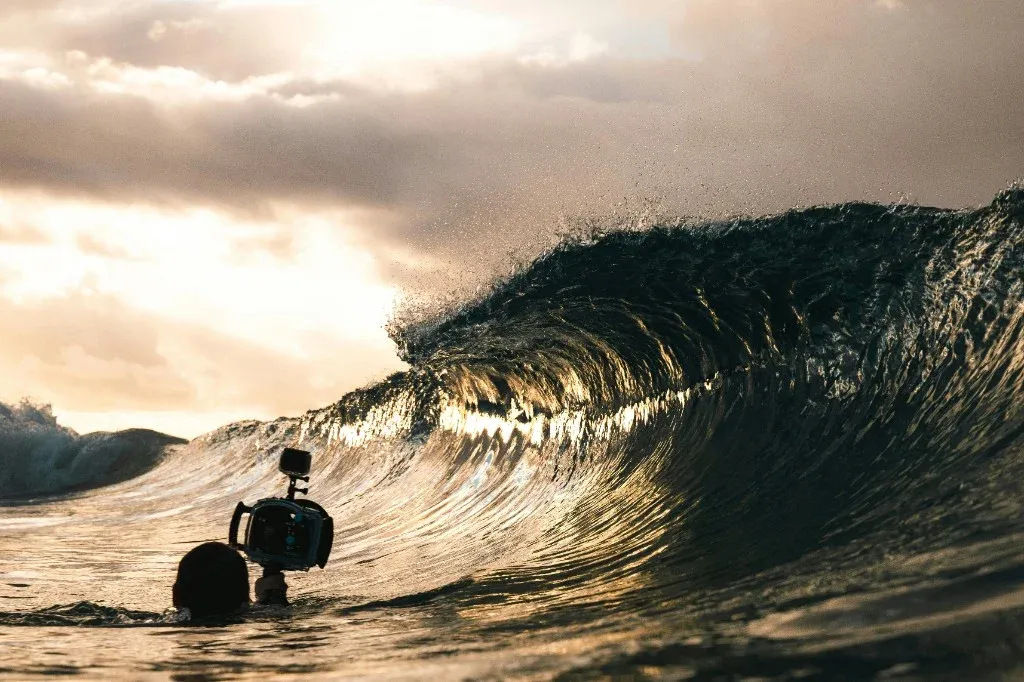
Finding photos from your Hossegor session
If you surfed at Hossegor recently, there's a reasonable chance a photographer was there. On Onda, search for "Hossegor" (or "La Gravière") and your session date — photographers who upload to the platform tag by location and date, making it easy to find your specific session.
No account needed. If your photos are there, you'll find them in about 30 seconds.
Search Hossegor sessions on Onda →
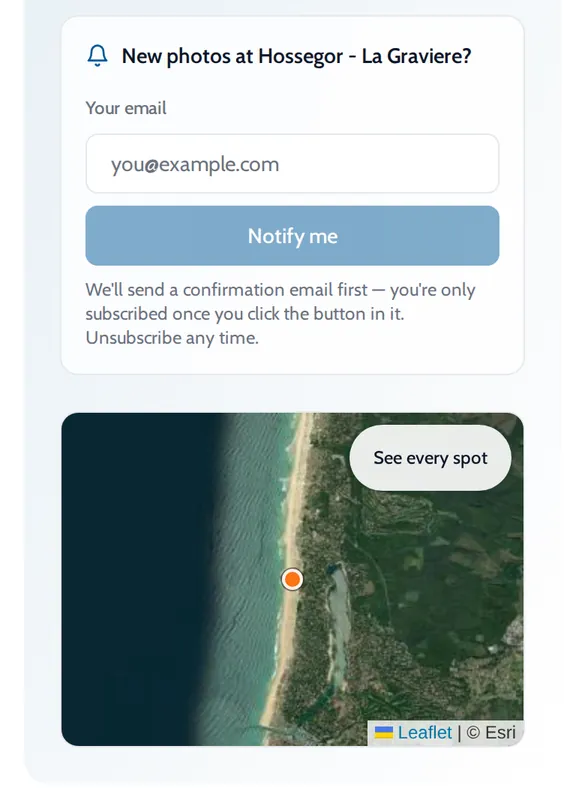
Practical information
Getting there: Hossegor is in southwest France, 90km north of Biarritz. The nearest international airports are Biarritz (90km) and Bordeaux (180km).
Parking: The beach car parks fill up fast in summer and during competitions. Arrive early or cycle.
Equipment: The flat beach means shooting from ground level with a telephoto (400–600mm) is standard. No climbing required.
Salt and sand protection: Hossegor's powerful shore break creates a lot of spray and wind-blown sand. Cover your bag between sessions and clean your gear regularly.
For camera settings specific to beach break conditions, see our settings guide. The nearby Basque Country — Mundaka, Zarautz, Biarritz — is worth exploring on the same trip. And if you're looking for photos from your session, check how to find photos of yourself surfing.