Surf Photography as a Side Hustle: What Nobody Tells You
Published 14 April 2026
The fantasy version: wake up at golden hour, shoot perfect barrels, upload to your phone, money appears. The reality is messier and more interesting than that. A surf photography side hustle can generate real income — but only if you approach it with the right expectations.
Is it a "passive" income? Not really.
Surf photography gets pitched as passive income. Upload once, earn forever. Technically true in the sense that a gallery can sell months after you shot it — but the effort required to get consistent surf photography income is anything but passive.
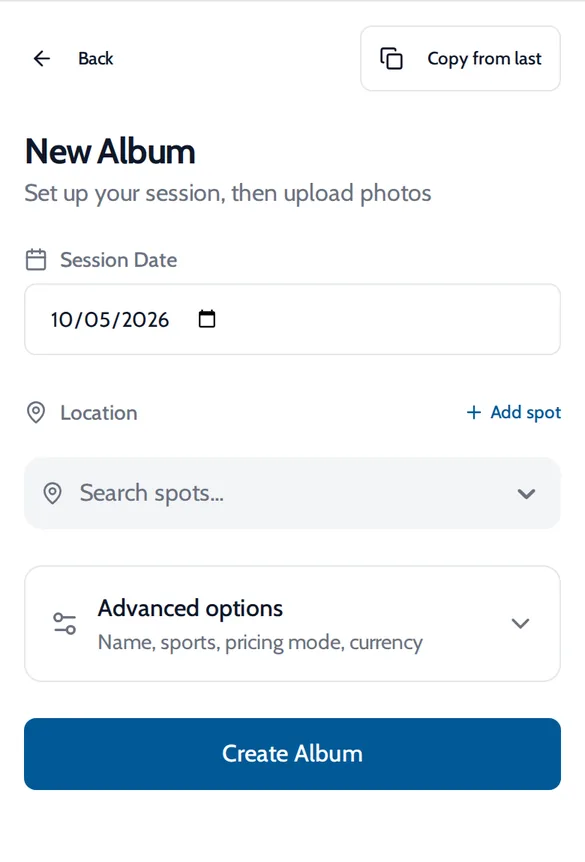
The photographers making €800–€1,500/month from beach photography are typically shooting 3–5 sessions per week, editing and uploading same-day or next morning, actively promoting galleries in local surf communities, and iterating on pricing and bundles based on what converts.
That's more like a part-time job than a passive stream. The upside? It's a part-time job where you're at the beach. If you want to understand how much surf photographers actually make, we break down the numbers in detail.
How long until you make real money?
Realistic timeline for a part-time surf photographer:
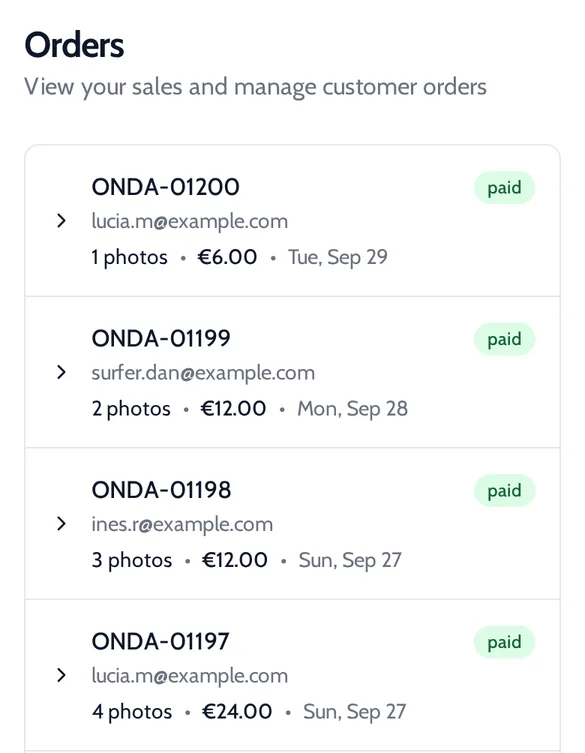
In months 1–2, you're learning the workflow, building a small following, making occasional sales. Expect €50–€200/month. By months 3–6, you've established yourself at 1–2 spots, surfers know your name, and you have a consistent routine — €200–€600/month is possible. From month 6–12, if you've been consistent, a loyal following, returning buyers, and word-of-mouth referrals can push you to €500–€1,500/month.
These aren't guaranteed — they're what's realistic for someone shooting decent quality at a reasonably active beach.
What you actually need to get started
You don't need a €10,000 kit to start. But you do need a few things:
Camera: Any modern mirrorless or DSLR with a fast burst rate works. The Sony a7 series, Canon R series, or even older bodies like the Nikon D500 are all fine entry points.
Lens: A 100–400mm zoom covers most beach photography scenarios without requiring a second mortgage. The Canon RF 100–500mm and Sony 200–600mm are both popular and don't break the bank relative to primes.
Memory cards: Fast UHS-II cards. Don't skimp here — you'll be shooting bursts and a slow card will cost you shots.
A platform: Where will you sell? This is often underestimated as a decision. A good platform handles watermarking, payment, and delivery so you can focus on shooting. A bad one creates admin work that eats your time.
That's basically it to start. Water housing, strobes, pole cameras — those come later if you want them.
The skills gap most beginners don't expect
Technical photography skills are actually not the bottleneck for most people getting into this. The harder skills are:
Culling efficiently. After a 2-hour session you might have 1,000–3,000 raw frames. Getting this down to 200–400 sellable selects in under an hour is a workflow skill that takes time to develop. Tools like Lightroom's star rating with keyboard shortcuts, or Photo Mechanic for speed culling, make a huge difference.
Editing consistency. Your photos need a consistent look across a session. Build a Lightroom preset that works for your typical conditions (flat morning light, harsh midday, golden hour) and apply it as a starting point.
Promoting without being annoying. Dropping your link in every surf group will get you banned. Building genuine community presence — posting teaser shots, engaging with local surf talk, being helpful — takes longer but creates a sustainable audience.
For more on the shooting and editing side, see our beginner's guide to surf photography.
The tax question
Often ignored until it's not: if you're making money, even as a side hustle, it's income. The rules vary by country, but generally once you're making consistent sales, you should be treating this as self-employment income and keeping records.
The good news: your gear, platform subscriptions, travel to shooting locations, and other costs are typically deductible as business expenses. Talk to an accountant familiar with freelance/creator income — it's usually worth it.
Who this works best for
Surf photography as a side hustle makes most sense if:
- You're already at the beach regularly (the marginal effort of bringing a proper camera is low)
- You live near or regularly visit an active surf spot
- You enjoy the social aspect — talking to surfers, building a local reputation
- You're patient enough to build over 6–12 months rather than expecting instant results
It's a terrible fit if you hate editing, hate self-promotion, or expect immediate returns.
Surf photography can pay. Not passively, not immediately, not without effort — but it can become a real income stream for someone who loves the beach and approaches it seriously. For the numbers, see how much surf photographers actually make, and when you're ready to choose where to sell, check our platform comparison.
The photographers who fail at this usually give up after 3 months of low sales, right before the consistency would have started to pay off.