How to Sell Surf Photos Online (The Complete Guide)
Published 7 April 2026 · Updated 4 September 2026
You've spent years honing your eye. You wake up before dawn, haul a 600mm lens to the beach, and nail shots that surfers will remember forever. The question is: are you making money from it?
Making money from surf photography is more achievable than most photographers think — but it only works if you have the right setup. This guide covers everything: platforms, pricing, workflow, and how to actually get surfers to buy.
Why selling surf photos online works
Surf photography has a natural advantage over most other niches: the subject and the buyer are the same person. Every surfer in your frame is a potential customer. They want those photos. They just need to know they exist and how to get them.
The challenge has always been the connection — how does a surfer find out you photographed them? That gap is closing fast, thanks to platforms built for exactly this use case.
Your options for selling surf photos
1. A dedicated surf photo marketplace (recommended)
Dedicated surf photography platforms like Onda handle the entire workflow: you upload your session, organize photos into albums by location and date, and surfers search by spot and day to find themselves. We compare the main options in our guide to the best platforms for selling surf photos.
This is the lowest-friction setup:
- No need to build your own website
- Surfers don't need an account to buy — just an email
- Payment is handled automatically
- Your photos are watermarked until purchased
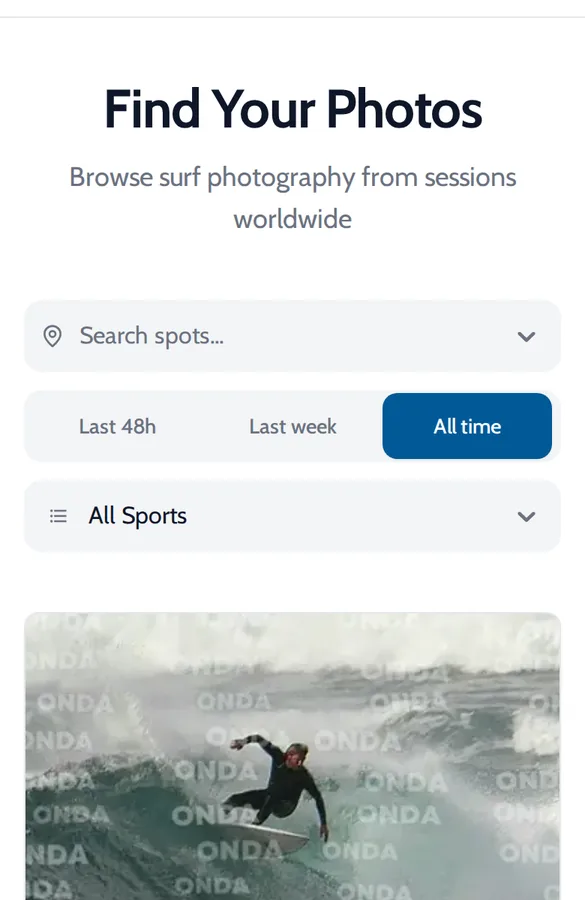
The trade-off is usually a platform commission (which varies by plan), but the time you save is worth it. It is worth checking before you commit: on Onda there is no commission at all — you set the price, you keep it, and Onda's service fee is paid by the buyer on top.
Check how a platform actually pays you, too, because that varies as much as the fee does. On Onda every sale is paid straight to you, through Stripe or your own PayPal, wherever you shoot.
2. Your own website with an e-commerce plugin
If you already have a photography website, you can add a shop via tools like Lightroom's client gallery, Pixieset, or SmugMug. This works well for private session clients where you already have a direct relationship.
It's less effective for beach photography where you need strangers to discover their photos.
3. Stock photography sites
Shutterstock, Adobe Stock, Getty Images — these work for editorial or commercial licensing, not for selling photos back to the people in them. Wrong model for surf photography.
4. Social media direct sales
Some photographers sell via Instagram DMs or Facebook groups. It works at small scale but it's chaotic — no automation, no watermarking, manual payment collection. Fine to start, not scalable.
Setting up your workflow
A realistic workflow for a beach session looks something like this:
- Shoot the session — aim for 200–500 selects from a 2-hour session
- Cull in Lightroom — remove blurry, repetitive, or poorly lit frames (be ruthless)
- Basic edit — colour grade your selects (a consistent preset speeds this up)
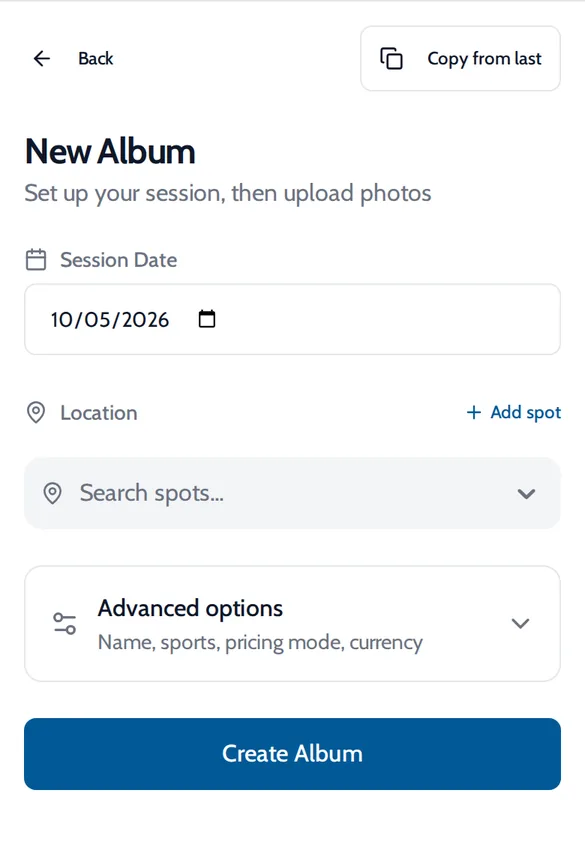
- Upload to your platform — tag with location and date, this is how surfers find their photos
- Share the link — post in local surf groups, put a QR code at the car park, hand cards to surfers you see in the lineup
The faster you can go from shoot to live gallery, the better. Surfers are most motivated to buy within 24–48 hours of a session.
Pricing your surf photos
Pricing is where most photographers undervalue their work. A few benchmarks:
- Single photo download: €8–€20 is a typical range
- Session bundles (5–10 photos): €25–€60
- Full session / album: €50–€120
The right price depends on your market (tourist spots vs. local breaks), the quality of your work, and how much competition there is at that spot.
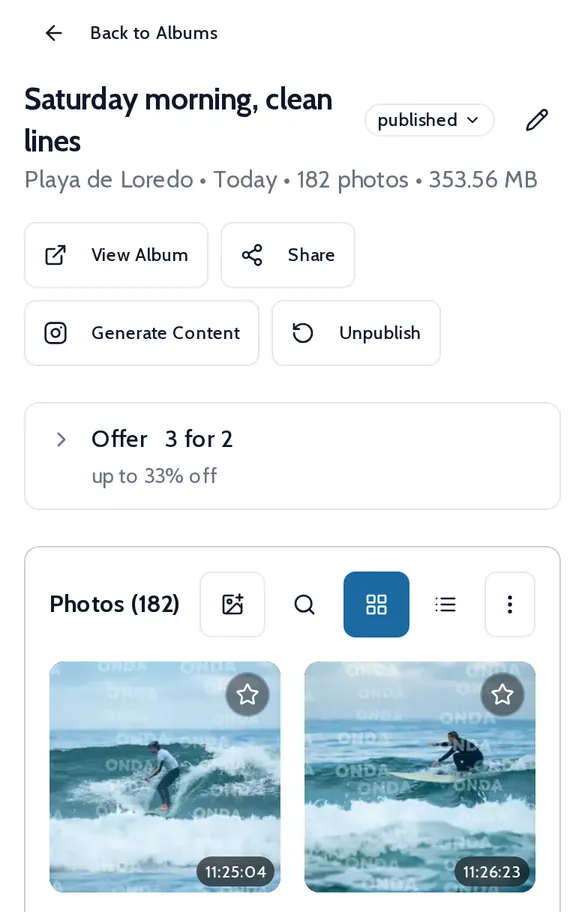
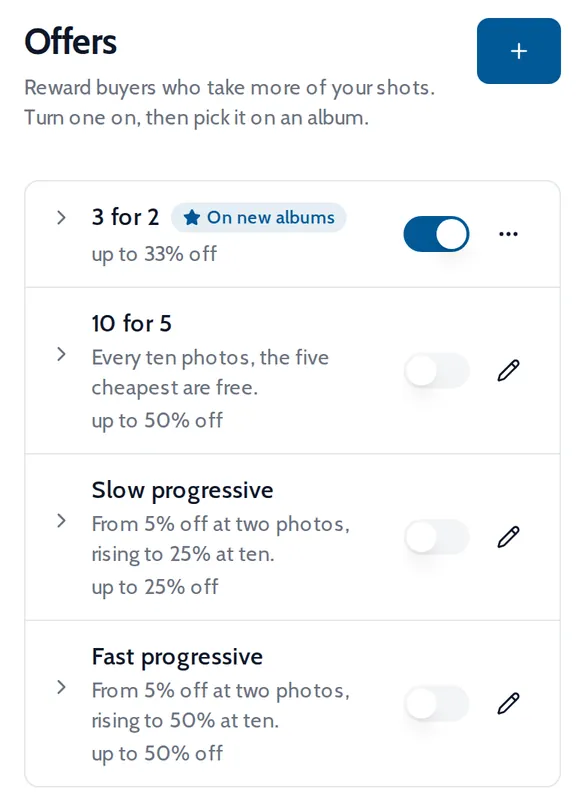
One practical tip: offer a bundle deal. "Buy 3, pay for 2" dramatically increases average order value. Surfers who find themselves in 8 photos will almost always buy more than one if there's an incentive.
Getting surfers to actually find their photos
This is the make-or-break step. A perfect gallery with no views makes zero sales.
At the beach:
- Put a small sign or QR code near the water entry point
- Talk to surfers after their session — "I got some great shots of you, they'll be live tonight at..."
- Leave cards at surf shops, vans in the car park, notice boards
Online:
- Post a teaser (watermarked) on Instagram with the location tagged
- Share in local surf Facebook groups and WhatsApp chats
- Post in forums for that specific break
Repeat visitors:
- If you shoot the same spot regularly, build a following. Surfers who buy once will come back.
We go deeper on this in our guide to getting surfers to buy your photos.
How much can you realistically make?
Honest answer: it varies wildly.
A photographer shooting a popular tourist break in summer can make €500–€2,000/month from passive photo sales alone. A local shooting uncrowded spots will make much less, but with lower effort.
The photographers who make real money from this treat it systematically: consistent posting schedule, multiple spots, fast turnaround, smart pricing. It's a numbers game.
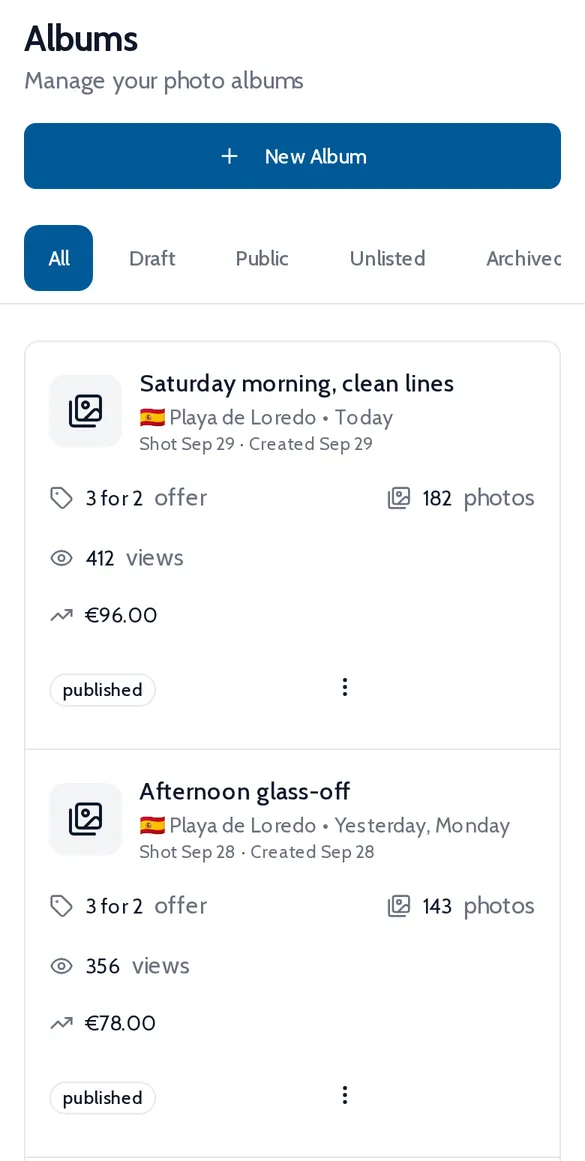
Selling surf photos online works best when you remove friction at every step — for yourself (fast upload workflow) and for the surfer (easy discovery, no sign-up needed to buy). We break down the numbers in detail in our surf photo pricing guide.
If you're not selling yet, the best time to start is after your next session.