The Surf Photographer's Gear Bag: What to Bring to the Beach
Published 29 June 2026
After years of carrying too much and too little, most surf photographers settle on a fairly consistent kit. This is what actually makes it into the bag for a working session, and why.
The camera and lens setup
This varies by photographer and budget, but the working setup for a typical shore-based session:
Camera body with spare battery (always). For a 2–3 hour session, one battery is often enough, but salt air and cold conditions drain batteries faster than normal. Having a spare in your pocket (not your bag) avoids an empty battery ending the session early.
Primary lens — the telephoto you'll use 90% of the time. If you're shooting from the beach: 100–500mm or 200–600mm range. If you know the break well and you'll be close: 100–400mm is more manageable to carry.
Optional second body or shorter lens for environmental or contextual shots. Some photographers carry a second body with a 24–70mm or 50mm for portrait work between action sequences. Others don't bother.
Lens cloth — not a brush, not a blower. Salt spray on the front element of your telephoto is a certainty. A quality microfiber cloth in an accessible pocket lets you clean quickly without stopping to dig through the bag.
Protection gear
Camera bag or backpack with weather sealing. The beach is not a clean environment. Sand in zippers, salt spray on exposed surfaces, rain — a quality bag protects against all of these. F-stop, Shimoda, and Lowepro all make well-regarded surf/outdoor photographer bags.
Rain cover for the camera. Even on clear days, wave spray at beach breaks can carry further than expected. A rain cover (Aquatech Soft Cover, THINK TANK Hydrophobia, or even a custom-fit rain cover from your camera manufacturer) is worth keeping clipped to your bag.
Lens hood. Always on. It reduces flare from side-light and provides a small amount of physical protection to the front element.
UV filter. Opinions divide on this. At beach breaks in strong sun, a UV filter reduces atmospheric haze and provides front element protection. Some photographers feel it marginally reduces sharpness; others use it consistently. Personal choice — but if you're shooting in conditions with significant spray risk, the protection argument is strong.
Storage and workflow gear
Multiple memory cards. Never rely on one card. A typical 2-hour burst session can fill 128GB. Carry at least two cards; three is better.
Card wallet or case. Loose memory cards in the bottom of a camera bag is how you lose work. A dedicated card case with labelled slots (shot/empty) keeps things organised.
Small notebook or phone notes. Logging which card was in the camera at what time makes post-processing session management easier. Some photographers shoot with a time-stamped card management system; others just note "started second card at 8:30am."
Personal comfort items that improve performance
Sunscreen. You're at the beach for 2–3 hours. This is obvious but regularly ignored.
Water. You're concentrating, often not moving much, and often in direct sun. Dehydration affects concentration and therefore missed shots.
Hat with a brim. Reduces squinting and glare when scanning the lineup. A polarized sunglass lens over the viewfinder (some photographers do this) reduces reflections when composing.
Grippy shoes or sandals. You may be scrambling on rocks, wet ramps, or sand. Flip-flops that come off in a scramble are a liability. Keen or similar water-sport sandals with straps are popular with surf photographers who shoot from rocks.
The small things that save sessions
Cable ties or velcro straps. For securing cables, straps, or improvised fixes.
A plastic bag. Not glamorous, but a large zip-lock bag can emergency-protect a camera or lens if conditions unexpectedly deteriorate.
Business cards / QR code cards. For giving surfers the gallery link immediately after the session — while they're still on the beach.
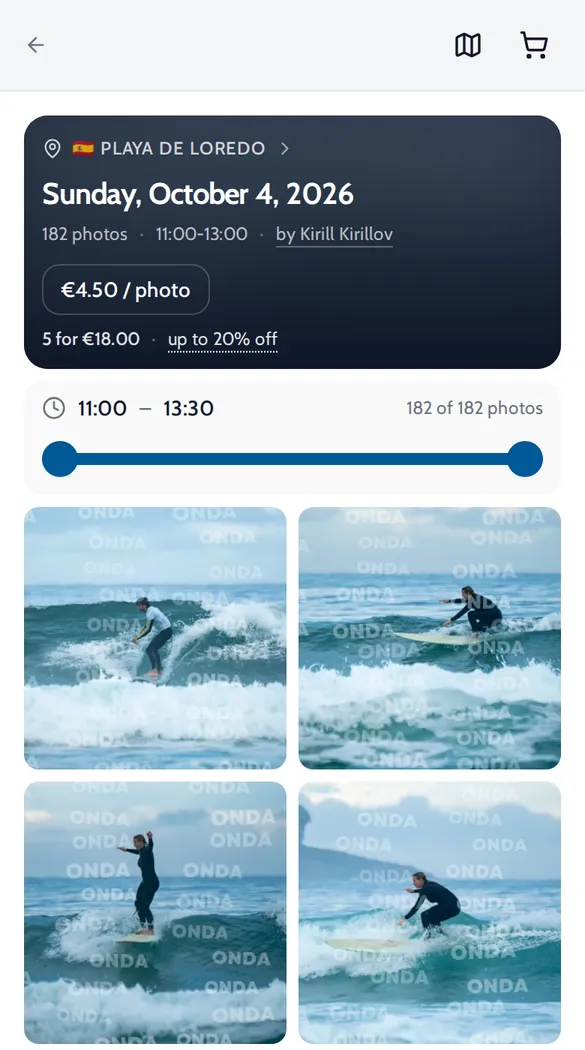
A portable phone charger. Your phone is your promotional tool — you'll want to post a teaser from the beach. A flat phone midway through the session wastes that opportunity.
What gets left out
Every experienced photographer has a "learned the hard way" list of things that used to go in the bag and no longer do.
Tripod or monopod: Almost never necessary for shore-based surf photography. Telephoto lenses with optical stabilisation plus high shutter speeds make them redundant. They add weight and limit mobility.
Flash or speedlight: Useless for outdoor surf photography in most conditions. A remote flash rig for in-water work is different, but that's a specialist setup.
Multiple long primes: Unless you're covering an event for a client and need the flexibility, carrying two heavy telephoto primes in addition to a body is more weight than it's worth for a personal shooting session.
Laptop: For session review at the beach — tempting, not practical. Review at home; post a teaser from your phone.
The bag weight reality
A full surf photographer setup is heavy. Camera body + 200–600mm lens is 3–4kg before the bag, spare batteries, cards, and protection gear. Add water and personal items and you're carrying 6–8kg to the beach.
The photographers who do this daily learn to be ruthless about weight. If you haven't needed it in the last 5 sessions, it doesn't go in the bag.
For more detail on individual pieces: best cameras, telephoto lenses, and water housing.
Ready to start selling your sessions? Onda is free to set up →